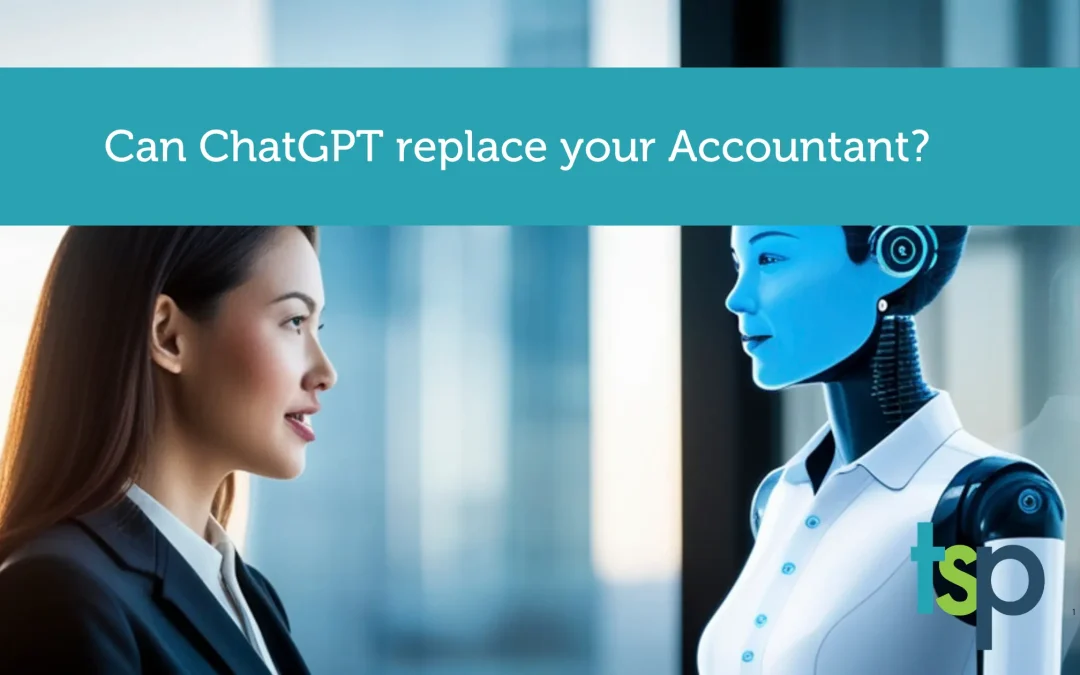
Is AI Giving You Tax Advice? Here’s Why That Could Cost You.
We get it. You’re busy running a business, managing a property portfolio, or just trying to get your tax sorted before the deadline creeps up on you. So when an AI tool spits out a confident, detailed answer to your tax question in about three seconds flat, it feels like a win.
The problem? That confident answer might be completely wrong, and the ATO won’t accept “ChatGPT told me to” as a valid defence.
At TSP, we’re increasingly seeing the clean-up work when AI-generated advice goes sideways. So let’s talk about what AI can and can’t do when it comes to Australian tax and super.
Where AI Can Actually Help
To be fair, AI tools aren’t entirely useless in the tax space. They can be genuinely handy for explaining concepts in plain English, helping you understand the difference between concessional and non-concessional super contributions, or giving you a general overview of what negative gearing means. Used as a starting point to form better questions, AI can save time and help you walk into a meeting with your accountant better prepared.
The trouble starts when AI moves from explaining concepts to acting like your accountant.
The Problem With “Sounds Right”
Tax and superannuation outcomes in Australia are highly fact-specific. Your income levels, business structure, age, residency status, assets, timing, and future plans all combine to produce an outcome that is unique to your situation. AI tools don’t know these details unless you tell them, and frankly, you probably shouldn’t be feeding that kind of sensitive personal and financial data into an online platform in the first place.
Even when AI does have the right information in front of it, it cannot weigh up competing risks or apply the kind of professional judgement that comes from decades of experience working through real client situations.
Then there’s the “hallucination” problem. AI tools are well known for providing answers that sound authoritative but are factually incorrect, out of date, or simply made up. In practice this can mean claiming deductions that don’t apply to your situation, miscalculating capital gains tax, suggesting superannuation strategies that breach contribution caps, or quoting legislation and ATO rulings that don’t actually exist.
These errors aren’t always obvious to someone without a tax background. They are, however, usually obvious to the ATO.
A Recent Tribunal Case Makes This Very Clear
A decision handed down by the Administrative Review Tribunal earlier this year, Smith and Commissioner of Taxation [2026] ARTA 25, highlighted exactly what can go wrong. The taxpayer appeared to have relied on AI tools to identify cases supporting their argument. The Tribunal found that some of the cases cited simply didn’t exist, while others had no relevance to the matter at hand.
The Tribunal noted that when someone fails to verify whether a case actually exists or bother to check its relevance, the Tribunal’s resources are wasted “as the Tribunal must look for cases that don’t exist and read cases that have no relevance at all.” It’s a blunt reminder that AI-generated legal and tax research needs to be verified by someone who knows what they’re looking at.
The ATO Is Watching
The ATO uses AI internally for fraud detection and data analytics, so they’re not opposed to the technology in principle. But when it comes to you relying on it for your tax affairs, their position is clear. Their published guidance on misinformation specifically identifies AI tools as a source of false, inaccurate, incomplete, or outdated information. The message is simple: verify everything, or face the consequences.
And those consequences are real. When an error is detected, the ATO will typically amend the return, charge interest on any shortfall, and may apply penalties even if the mistake was genuinely unintentional. “The AI said so” is not a reasonable excuse, and it won’t reduce what you owe.
We’re seeing this play out most clearly in work-from-home claims, property deductions, and SMSF compliance.
Super Is an Especially High-Stakes Area
If there’s one area where we’d urge serious caution around AI advice, it’s superannuation. Self-managed super funds in particular operate under strict rules, and AI tools regularly miss critical details around eligibility, timing, purpose tests, and investment restrictions. The result can be non-compliance, forced unwinding of transactions, and penalties running into thousands of dollars. Mistakes in super can also permanently damage your retirement savings, and unlike some tax errors, they can be very difficult to unwind once made.
One More Risk Worth Mentioning: Your Data
Beyond the accuracy issues, there’s a practical privacy risk that often gets overlooked. Entering personal or financial information into an AI platform means you lose control over how that data is stored, processed, or potentially used. It’s a risk that simply isn’t worth taking.
The Smarter Approach
AI works best as a tool to support your thinking, not to replace professional advice. Use it to get your head around the basics, but bring those questions to us before you act on anything. We can review your full circumstances, flag the risks, and make sure you’re making decisions based on accurate, current advice that actually applies to you.
At TSP, we always encourage clients to come to us early with ideas and questions, before commitments are made. That conversation almost always costs far less than fixing problems after the fact.
AI might be a useful assistant, but it’s not your accountant. When it comes to protecting your money and staying on the right side of the ATO, personalised professional advice isn’t optional, it’s essential.
Ready to get advice you can actually rely on? Call TSP on 4926 4155 or email ad***@****************om.au. We’ve been helping Newcastle and Hunter Valley businesses and individuals navigate tax and super for over 42 years.
Can I use AI to help with my tax return in Australia?
You can use AI tools to help you understand general tax concepts, but you should never rely on AI-generated advice to make actual decisions about your tax return. The Australian tax system is highly specific to individual circumstances, and AI tools cannot account for your full financial situation, business structure, or the current state of tax law. Errors in your return can result in ATO amendments, interest charges, and penalties, regardless of how the mistake occurred.
Is AI tax advice legally acceptable to the ATO?
No. The ATO has published clear guidance flagging AI tools as a potential source of false, inaccurate, incomplete, or outdated information. Relying on AI-generated advice does not constitute a reasonable excuse for errors in your tax return. If the ATO identifies a problem, they will amend the return and may apply interest and penalties regardless of where the advice came from.
What are the risks of using ChatGPT or other AI tools for tax questions?
The main risks include receiving advice that doesn’t apply to your specific circumstances, acting on outdated information, breaching superannuation contribution caps or SMSF rules, and in some cases, relying on legislation, rulings, or case law that simply doesn’t exist. AI tools are known to “hallucinate,” meaning they can produce confident-sounding answers that are factually incorrect. In tax matters, those errors can be very expensive to fix.
Can AI give advice about my self-managed super fund (SMSF)?
This is one of the highest-risk areas for AI-generated advice. SMSFs operate under strict rules around eligibility, timing, purpose tests, and investment restrictions. AI tools frequently miss these nuances, which can result in non-compliance, forced unwinding of transactions, and significant financial penalties. SMSF mistakes can also permanently damage your retirement savings, making professional advice in this area essential rather than optional.
Is it safe to enter my financial information into an AI tool?
We would strongly advise against it. Once personal or financial data is entered into an AI platform, you lose control over how that information is stored, processed, or used. This creates real privacy and data security risks that aren’t worth taking, particularly when dealing with sensitive financial information.
How should I use AI tools when it comes to tax and accounting?
AI is best used as a starting point for understanding concepts, not as a decision-making tool. If an AI tool helps you understand a concept or prompts you to ask a better question, that’s a good use of the technology. The next step should always be to bring that question to a qualified accountant who can assess your specific circumstances before you take any action.
What should I do if I’ve already acted on AI tax advice?
If you’ve made decisions based on AI-generated tax or super advice, it’s worth having a professional review your situation sooner rather than later. In many cases, issues can be addressed before they become more serious problems. The earlier you seek advice, the more options you’re likely to have available.
Why is professional accounting advice better than AI for tax questions?
A qualified accountant understands your full financial picture, stays current with changes to Australian tax law, and can apply professional judgement to competing risks and priorities. They are also legally accountable for their advice in a way that an AI tool simply is not. For complex matters like business structuring, capital gains tax, family trusts, and superannuation planning, that expertise and accountability makes a significant difference to your outcomes.

When not at work, Deidre enjoys spending time with her husband and two children, as well as indulging in audiobooks and coffee.
Areas of Expertise:
✅ Business structuring & compliance
✅ SMSF strategy & auditing
✅ Tax planning for individuals & businesses
📧 deidrem@tspaccountants.com.au