
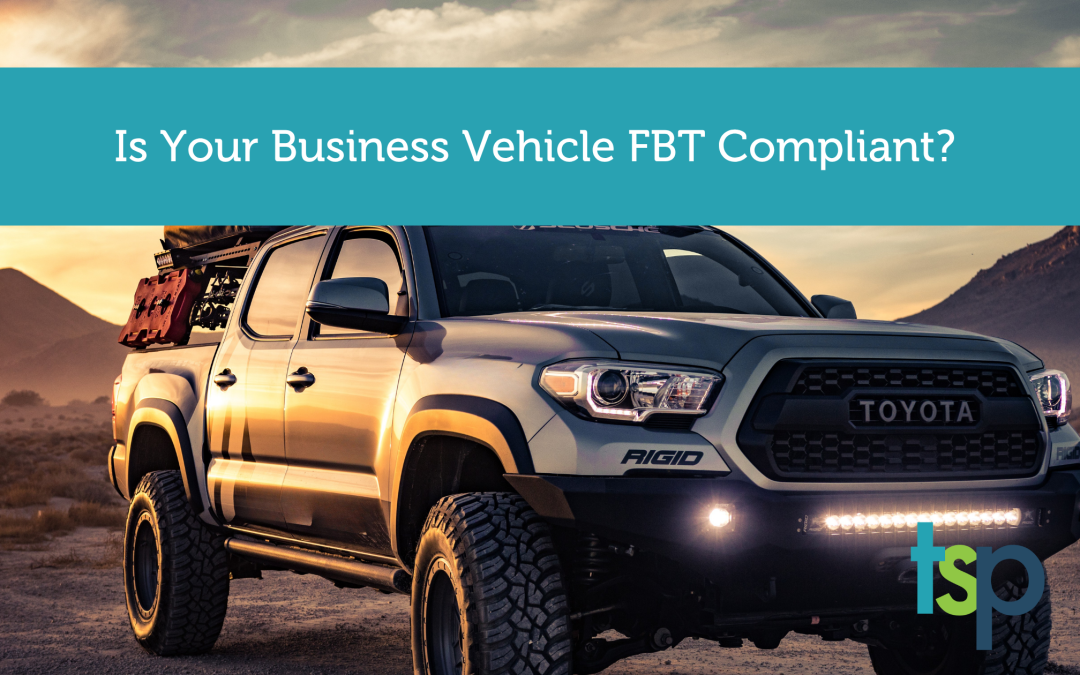
If you provide vehicles to your employees, whether it’s a tradie ute, a company car for a sales rep, or a vehicle thrown in as part of a salary package, the ATO has a message for you: they’re paying close attention. And with the kind of sophisticated data-matching technology the ATO now has at its disposal, assumptions and shortcuts around Fringe Benefits Tax are becoming increasingly risky territory.
I want to walk you through what the ATO is currently focusing on, because the consequences of getting this wrong go well beyond a simple correction notice. We’re talking back taxes, interest charges, and in more serious cases, reputational damage with lenders, clients, and partners. The good news is that with a bit of proactive housekeeping, most of these risks are entirely avoidable.
The Dual-Cab Ute Myth
Here’s one that comes up constantly in my conversations with business owners, particularly in the trades, agriculture, and construction industries: the belief that dual-cab utes are automatically FBT-free. I understand where it comes from, but it’s simply not accurate.
Whether a vehicle qualifies for an FBT exemption depends on two things: how the vehicle is designed, and how it’s actually used throughout the FBT year. Even if a ute is designed to carry a load of at least one tonne, or isn’t primarily designed to carry passengers, FBT can still apply if there’s private use occurring. The ATO has identified a significant number of cases where employers incorrectly claimed full exemptions and ended up wearing back taxes plus interest as a result.
The most sensible way to protect your position is to have evidence in place before the ATO comes asking. While the rules don’t specifically require a formal logbook in every scenario involving commercial vehicles, not having records that function like one makes it very difficult to defend your position during a review or audit. Think of it as having your paperwork ready before someone knocks on the door rather than scrambling to find it after.
Private Use Versus Business Use: You Need to Know the Difference
If a full FBT exemption doesn’t apply to a vehicle in your business, then FBT is generally calculated on the private use component. This means you need to determine what portion of the vehicle’s running costs, including fuel, maintenance, and depreciation, relates to personal trips versus business travel.
I know it can feel like this is splitting hairs, but proper apportioning can actually reduce your FBT liability even when a vehicle is used predominantly for business. The key point to remember is that if an FBT liability is triggered, it’s the employer’s responsibility, not the employee’s. So it pays to understand where you stand.
Don’t Skip Lodging Your FBT Return
One thing that surprises many business owners is that even if they believe their FBT liability for the year is minimal or negligible, there may still be an obligation to lodge an FBT return. The ATO’s systems automatically flag businesses that should be lodging but aren’t, and the penalties for non-compliance can reach up to 200 per cent of the tax owed, plus interest. That’s not a comfortable position to be in.
Mark this date in your calendar now: FBT returns are due 21 May each year. Filing on time keeps your business compliant and avoids some very unpleasant cash flow surprises.
Logbooks: Worth the Effort
A valid logbook tracks odometer readings, trip purposes, and business-use percentages across a 12-week period, and it’s renewable every five years. Not every vehicle scenario specifically requires one, but failing to keep logbooks can sometimes lead to FBT liabilities that could easily have been avoided with better record-keeping.
The practical upside is that good records don’t just protect you from the ATO. They can also support legitimate deductions. There are some excellent digital logbook apps available that simplify the tracking process considerably, reduce the chance of errors, and save time at year end. If your team is currently using paper-based systems or nothing at all, it’s worth reviewing that.
Why This Matters Beyond the Tax Bill
I want to be clear that FBT non-compliance isn’t just a numbers problem. An ATO audit takes significant time and energy away from running your business. It can also affect how you’re perceived by clients, business partners, and lenders who may see ATO scrutiny as a red flag. Conversely, getting this right means you’re only paying what you actually owe, your cash flow is predictable, and in many cases there are efficiencies to be found that you might not have been aware of.
If you provide vehicles to staff and you’re not confident that your current arrangements are watertight, please don’t wait for the ATO to prompt the conversation. Review your vehicle policies now, update your records, and if you’re unsure where you stand, reach out to us. At TSP, we help businesses manage FBT with confidence so it becomes a routine part of compliance rather than a source of stress.
Call us on 4926 4155 or email ad***@****************om.au and we’ll talk it through.
FAQS
Are dual-cab utes exempt from Fringe Benefits Tax? Not automatically. While dual-cab utes are often associated with FBT exemptions, the reality is more nuanced. Whether an exemption applies depends on the vehicle’s design specifications and how it’s actually used during the FBT year. Private use of the vehicle can trigger an FBT liability even if the ute is designed to carry a one-tonne load. Employers should keep supporting records and seek advice to confirm their position.
What is the due date for lodging an FBT return in Australia? FBT returns are generally due on 21 May each year. Businesses that lodge through a registered tax agent may have an extended deadline, but it’s important to confirm this with your accountant. Failing to lodge when required can attract automatic penalties.
Do I have to lodge an FBT return if my liability is small? Possibly, yes. Even if you believe your FBT liability is minimal for the year, there may still be a legal obligation to lodge a return. The ATO’s systems flag non-lodgers automatically, and the penalties for non-compliance can be significant. Speak to your accountant to confirm your obligations.
How does the ATO detect FBT non-compliance? The ATO uses sophisticated data-matching technology that cross-references information from a range of sources, including motor vehicle registration data, salary packaging arrangements, and employer records. This means assumptions and omissions that may have gone undetected in the past are now more likely to attract attention.
What records do I need to keep for work vehicles? A valid logbook covering a 12-week period is the most reliable form of record-keeping for motor vehicles. It should capture odometer readings, trip purposes, and business-use percentages. Digital logbook apps are an efficient way to manage this. While not every vehicle scenario specifically requires a logbook, the absence of adequate records can make it significantly harder to defend an FBT position during an ATO review.
What happens if the ATO audits my business for FBT non-compliance? If the ATO identifies non-compliance, it can impose back taxes plus interest, and penalties can reach up to 200 per cent of the tax owed in serious cases. An audit also diverts time and resources from running your business and can affect your standing with lenders and business partners. Proactive compliance is far less costly than dealing with an audit after the fact.

With 30+ years of experience, David is a highly skilled tax and business advisor with expertise spanning primary production, transport, retail, medical, and professional industries. His broad knowledge allows him to provide practical, results-driven strategies for clients of all sizes.
David is a member of Chartered Accountants Australia and New Zealand and is also an ASIC-registered SMSF auditor. His commitment to helping businesses grow makes him a vital part of the TSP leadership team.
Qualifications & Expertise:
✅ Chartered Accountant (CA)
✅ SMSF Auditor & Registered Tax Agent
✅ Business & tax planning across multiple industries
📧 davida@tspaccountants.com.au |
- Is Your Business Vehicle FBT-Compliant? The ATO Is Watching - 10/04/2026
- Your Small Business EOFY Checklist - 13/03/2026
- Downsizer Contributions and the Main Residence Exemption - 11/02/2026